A single, seemingly insignificant piece of clothing managed to spark outrage, inspire bans, and even lead to arrests across the globe. The bikini became a lightning rod in the struggle between modesty and personal freedom. Condemned by religious leaders, outlawed by governments, and denounced as immoral, it nevertheless endured as women continued to wear it, slowly reshaping social norms with each public appearance.
At the start of the 20th century, swimwear was designed to conceal rather than celebrate the body. Heavy wool garments covered women from neck to knee, prioritizing propriety over comfort. Public beaches enforced strict rules, with officials measuring hems and tailors standing by to correct violations. Any exposed limb risked public shaming or removal from the beach.
Change arrived gradually. In 1907, swimmer Annette Kellerman challenged convention by wearing a streamlined one-piece that exposed her arms and legs. Though controversial, her defiance captured public attention and helped usher in a new era of functional swimwear. By the 1920s, cultural shifts encouraged slightly freer designs, though modesty still prevailed.
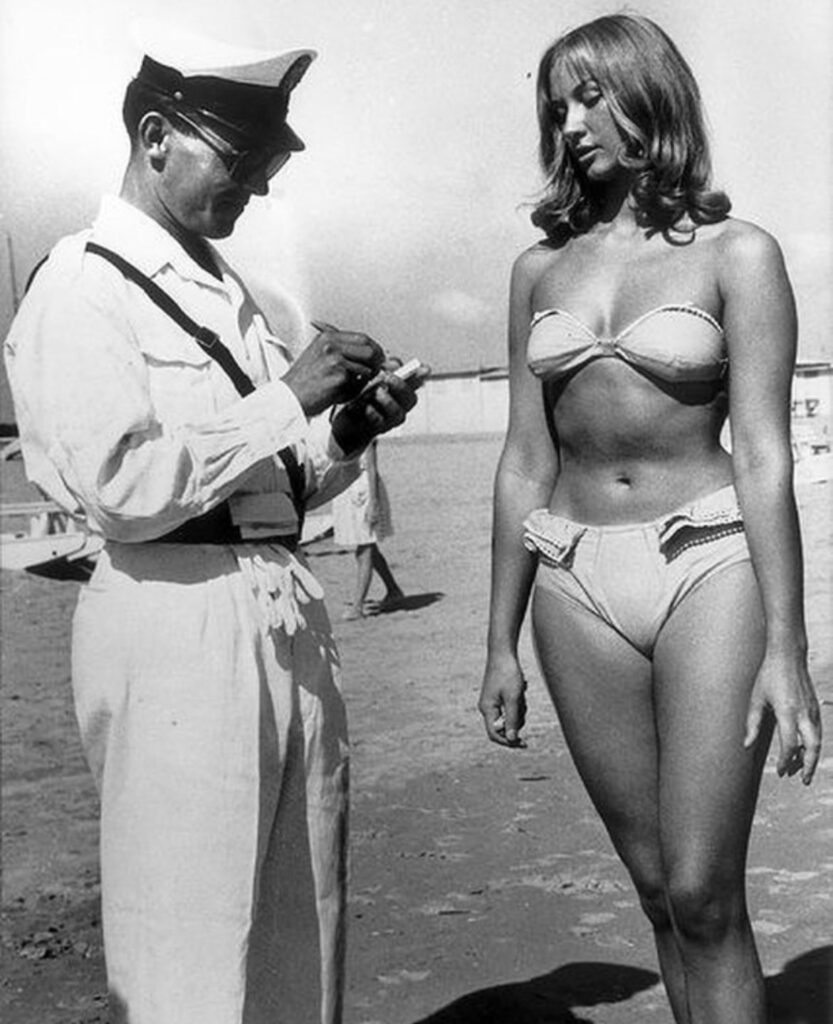
The true rupture came in 1946 with the debut of the bikini. Revealing the navel and far more skin than ever before, it provoked swift backlash. Countries across Europe banned it, religious leaders labeled it sinful, and women were fined or expelled from beaches for wearing it.
Acceptance came slowly through film, fashion, and cultural rebellion in the 1960s. Iconic actresses helped transform the bikini into a symbol of confidence and independence. By the 1970s, it had fully entered the mainstream.
Today, swimwear represents choice rather than conformity. What was once scandalous now reflects individuality, reminding us how a small garment helped redefine freedom and self-expression.