While cleaning out his grandfather’s old garage, the narrator comes across a worn metal device covered in dust and signs of age. At first glance, it looks like nothing more than an ordinary piece of scrap metal. With the garage full of forgotten tools and equipment, he considers throwing it away without giving it much thought.
However, the object’s story takes an unexpected turn when someone offers him $400 for it. The surprising offer immediately changes his perspective. What he had nearly discarded suddenly seems worth investigating, and he decides to find out why someone would be willing to pay so much for an old, rusty tool.
Rather than accepting that it is simply junk, the narrator takes a closer look at its unusual construction. Its shape and mechanical design suggest that it was made for a specific purpose, although its function is not immediately obvious. The unexpected interest makes him curious about what his grandfather might have used it for.
After doing some research, he discovers that the object is a vintage automotive valve spring compressor. It was a specialized tool used by mechanics when working on vehicle engines, particularly when removing and installing valve springs. Its design allowed mechanics to handle components that required controlled pressure during engine repairs.
Tools like this played an important role in traditional automotive maintenance. Before modern equipment became widespread, mechanics relied on specialized hand tools to complete detailed engine work. A valve spring compressor helped make an otherwise difficult repair task more manageable and allowed important engine components to be serviced.
The discovery also reveals how much automotive repair equipment has changed over the decades. Older tools were often built from heavy metal, designed to withstand repeated use in professional workshops. Although newer equipment may offer different features and improved convenience, vintage tools remain reminders of the practical engineering and craftsmanship that once defined everyday mechanical work.
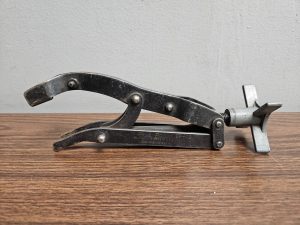
Today, certain older automotive tools attract collectors, restorers, and people interested in the history of automobile maintenance. Their value can vary depending on their age, condition, rarity, manufacturer, and overall demand. Some uncommon designs may become especially desirable when they remain intact and retain their original features.
What began as an ordinary garage cleanout therefore becomes an unexpected discovery. A worn metal object that nearly ended up in the trash turns out to be a specialized piece of automotive history, potentially worth hundreds of dollars. The experience serves as a reminder that old garages can contain forgotten treasures, and that something that looks like worthless scrap may have a fascinating story behind it.