After several days without a public update, investigators in the Nancy Guthrie case returned with cautious but meaningful statements. Authorities stopped short of announcing a suspect or a major breakthrough, yet they confirmed that forensic testing and evidence analysis remain actively underway. As the search stretches into its third week, officials have emphasized persistence and methodical work behind the scenes. Roughly 400 personnel are now assigned to the investigation, underscoring the scale of the effort. While details remain limited, newly disclosed information suggests that laboratory results and evidence review could play a pivotal role in determining what happened. Community members have continued gathering outside Nancy’s Tucson home, leaving tributes and holding onto hope as law enforcement works steadily through each lead.
According to The New York Times, Chris Nanos confirmed that DNA evidence was recovered from Nancy’s residence. Officials noted that the genetic material does not match anyone known to have had routine contact with her. Investigators have also collected DNA samples from relatives and individuals who had lawful access to the property to eliminate expected profiles. In addition, gloves were discovered roughly two miles from the home and are currently undergoing laboratory analysis. However, authorities cautioned that there is no definitive way to determine whether those gloves are the same ones seen in doorbell footage recorded on February 1. Sheriff Nanos reiterated that investigators remain committed, stating they will continue working the case for as long as it takes.
Experts say that even without an immediate database match, the unidentified DNA could still become a critical lead. As reported by CNN, investigators may turn to genetic genealogy if traditional criminal databases do not yield results. This technique compares unknown DNA profiles with voluntarily submitted genealogy data to identify possible relatives and construct family trees that narrow potential identities. Former FBI assistant director Frank Figliuzzi explained that such samples are typically checked first against national systems and known contacts. If no match is found, private-sector databases may provide additional avenues. Former FBI agent Bryanna Fox added that even partial matches can generate investigative momentum.
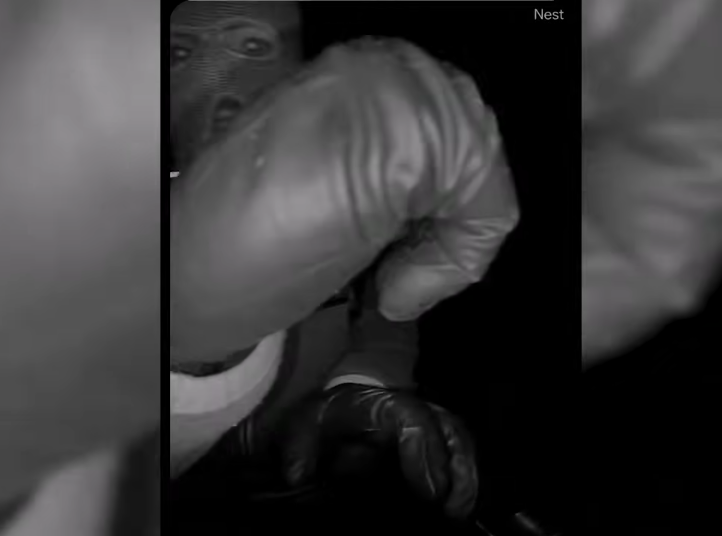
Meanwhile, public attention has centered on surveillance footage released by Federal Bureau of Investigation Director Kash Patel. The recovered images show a masked individual at Nancy’s front door the morning she disappeared. Forensic artist Lois Gibson produced a sketch based on visible features, primarily the eyes and portions of the lips and mustache. Analysts noted that the mask did not fully cover the mouth, which some experts believe could increase the likelihood of biological evidence being left behind.
Online discussion intensified as viewers scrutinized screenshots of the masked figure. Some social media users speculated about whether the visible eyebrows suggested a woman, though officials have not confirmed any conclusions about the suspect’s identity or gender. Amid the speculation, Nancy’s family continues to appeal for information. In a video message, Savannah Guthrie urged anyone with knowledge to come forward, expressing hope and faith that it is never too late to do the right thing. As forensic testing progresses, investigators remain focused on evidence rather than conjecture, emphasizing that patience and precision will ultimately determine the case’s outcome.